The State Bank of Pakistan (SBP) has released its Annual Report on the State of Pakistan’s Economy for FY2025-26, highlighting improvements in key macroeconomic indicators despite challenges including global trade uncertainties, monsoon flooding and regional geopolitical tensions.
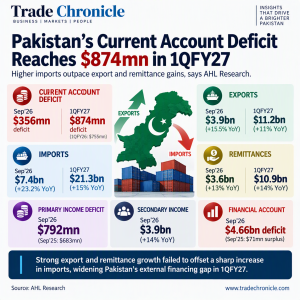
According to the report, Pakistan maintained macroeconomic stability through prudent monetary policy, fiscal consolidation and economic reforms under the IMF programme. Real GDP growth improved during FY26, supported by a rebound in large-scale manufacturing, while strong workers’ remittances helped contain the current account deficit to just 0.1% of GDP.
The report noted significant improvement in foreign exchange reserves, supported by SBP purchases, official inflows, Eurobond and Panda bond issuances, and inflows through Roshan Digital Accounts. Inflation remained broadly within the medium-term target range despite rising energy prices linked to regional conflicts.
SBP stressed that structural reforms remain essential for sustainable growth and job creation. A special chapter identified weak economic transformation, low female labour force participation, youth unemployment and a large informal sector as major challenges, while emerging trends such as Industry 4.0 and the green transition present new opportunities and risks.
For FY27, SBP projects real GDP growth of 3.5-4.5%, supported by stronger domestic demand, improved agricultural output and expansion in services. The central bank expects the current account deficit to remain within 0-1.0% of GDP, while inflation is projected to gradually ease towards the medium-term target range of 5-7%.