Chairman Businessmen Group (BMG) Zubair Motiwala and President Karachi Chamber of Commerce & Industry (KCCI) Muhammad Rehan Hanif have expressed grave concern and deep disappointment over the government’s decision to suspend gas supply to industries for two days a week, along with curtailment of supply to fertilizer plants, warning that the move could have far-reaching and damaging consequences for Pakistan’s already fragile economy.
Chairman BMG and President KCCI, while describing the decision as extremely alarming and counterproductive, stated that Pakistan is already facing serious economic challenges due to the continuously rising cost of doing business, particularly the exorbitant prices of gas and electricity, which have significantly eroded the competitiveness of local industries.
They pointed out that the repercussions of such policies are already visible as Pakistan’s exports have recently declined by 8.76 percent in February, reversing the brief recovery seen earlier and raising serious concerns among exporters and economic stakeholders. Export proceeds dropped to around $2.27 billion in February, while the country’s trade deficit has widened to approximately $25 billion, further intensifying pressure on the national economy.
Zubair Motiwala and Rehan Hanif emphasised that at a time when Pakistan desperately needs to enhance exports and stabilise its external account, suspending gas supply to industries for even two days a week would severely disrupt industrial operations, reduce production capacity, and ultimately cause delays or cancellations of export shipments. “Instead of supporting exporters and manufacturers, such decisions will only deepen the crisis being faced by industries and further weaken Pakistan’s export performance”, they cautioned.
Referring to the government’s decision to establish a high-level Action Committee comprising 18 members to address the energy situation, Chairman BMG and President KCCI described the initiative as a positive step, but stressed that the committee would remain incomplete without proper representation from the industrial/ export community.
While strongly urging the government to include representatives from the Karachi Chamber, they emphasised that the business community is in a far better position to provide practical insights, ground realities, and workable recommendations to improve the overall energy management framework and revive industrial growth.
They noted that industries in Karachi and across the country are already struggling with skyrocketing energy costs, unstable policies and declining demand. The additional burden of gas suspension would force many factories to operate at extremely low capacity or temporarily halt production altogether, which could result in massive financial losses, layoffs, and a sharp decline in export volumes.
Chairman BMG and President KCCI also highlighted the paradoxical situation surrounding the country’s gas management policy. Only a few months ago, discussions were underway regarding the deferral of imported RLNG cargo from Qatar because the country was reportedly facing reduced demand for gas and the situation remains the same as of now. At the same time, industries were compelled to use an expensive mix of indigenous gas and RLNG at escalating ratios of 10 percent, 20 percent and even up to 40 percent RLNG, significantly increasing the cost of energy for the industrial sector.
They further pointed out that, due to much higher tariffs, industrial gas consumption has declined sharply because many factories have reduced operations and shut down captive power plants due to unaffordable energy costs. According to industry estimates and independent analyses, gas tariffs for captive power plants have nearly tripled in recent months, pushing gas costs to levels far higher than those in competing economies in the region.
Motiwala and Rehan Hanif also cited documented evidence indicating that certain natural gas wells were capped in recent years due to a surplus supply of RLNG, raising serious questions about the overall planning and management of the gas sector. They stated that reports and regulatory observations indicated that gas production had been restricted because the available supply was not fully utilised, while expensive imported RLNG continued to be purchased under long-term commitments.
They also recalled that SNGPL had earlier raised serious concerns over the sharp decline in gas consumption, cautioning that the situation could create operational and safety challenges within the transmission network. In this regard, SNGPL had formally communicated with its gas suppliers, advising them to reduce the pressure of gas being injected into the system, as the falling demand could lead to excessive pressure build-up in the pipelines, which, if left unaddressed, might pose serious safety hazards, including the risk of damage or rupture in the gas transmission infrastructure.
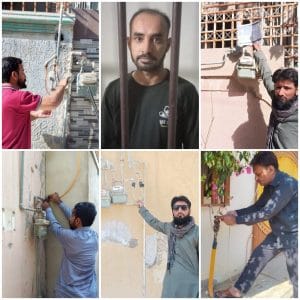
The business leaders stressed that instead of imposing disruptive measures such as suspending gas supply to industries, the government should focus on structural reforms within the gas sector, particularly by tackling the long-standing issues of unaccounted-for gas (UFG), line losses, leakages and widespread pilferage, which continue to cause massive financial losses to the national exchequer every year.
“Industries are the backbone of the economy and the primary drivers of exports, employment and revenue generation. Uninterrupted gas supply to industries must be ensured at any cost in accordance with the actual demand of the industrial sector”, they asserted.
“If the government is genuinely serious about preserving Pakistan’s export image in the international market, it must immediately ensure uninterrupted and affordable energy supply to the industrial sector. Otherwise, exporters will face serious delays in production and shipment schedules, forcing international buyers to shift their orders to competing countries”, they warned.
Zubair Motiwala and Rehan Hanif concluded by urging the federal government and relevant authorities to immediately review the decision of suspending gas supply to industries, adopt a balanced and industry-friendly energy policy, and ensure that Pakistan’s manufacturing sector receives the necessary support to revive production, strengthen exports and stabilize the national economy.