
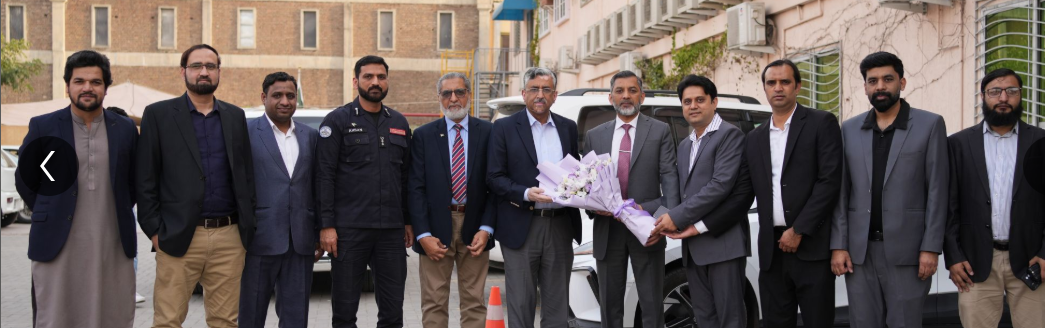
The seminar titled “Preventing Major Fire Incidents – Shared Responsibilities of All Stakeholders” was held in Islamabad by Safe T Consult in collaboration with the Trade Expeditors Professional Development Centre (TEPDC), an initiative of TEU Global. Mr Sardar Tahir Mehmood, President of the Islamabad Chamber of Commerce and Industry, served as the Chief Guest, while Dr Abdur Rahman, Director General of Emergency & Disaster for the CDA, was the keynote speaker.
Engr. Naeem Ahmad Subhani, CEO of Safe T Consult, presented findings on major fire accidents, along with recommendations and the responsibilities of various stakeholders. Mr Zulqarnain Chughtai, Director of Fire & Safety Pvt. Ltd, emphasized the importance of timely fire detection, location, and response using the appropriate equipment.
A panel discussion followed, featuring Engr. Dr Basharat Hasan Bashir, Engr. Naeem Ahmad Subhani, and Mr Muhammad Ahsan, Director of Fire & Rescue at Capital Emergency Services, CDA. They engaged in a candid dialogue on compliance and the roles of all stakeholders.
Key messages from the seminar included:
– Most major fires are preventable; gaps exist in compliance, awareness, and enforcement.
– Fire safety is a fundamental business and social responsibility.
– Stronger oversight, inspections, and coordination are essential.
– A shift from a reactive response to a preventive culture is necessary, involving sound design, third-party audits, maintenance, and training.
– Address recurring root causes such as electrical faults, gas leakages, high combustible loads, inoperative systems, and code non-compliance.
– Early detection, emergency lighting, evacuation planning, and proper equipment selection can save lives.
– Relying solely on city fire services without investing in fire safety is ineffective; blaming responders after incidents is unrealistic. We must develop a culture of safety instead.
The next steps involve sustained awareness and training, including joint drills, while sharing responsibilities among owners, developers, tenants, industries, media, academia, and civil society to prevent fires.
Strong collaboration is needed across government, business, professionals, fire services, media, academia, and civil society to reduce preventable fires and to protect lives, assets, and reputations. We must continue to work together to enhance fire safety. Deeper public-private collaboration is essential to safeguard lives, assets, and reputations.
In conclusion, the organisers expressed their gratitude to the speakers, partners, and participants from various sectors, including the industry, regulators, fire responders, and fire safety leaders, for their focus on solutions.
