Pakistan’s economic activity, however, remained resilient in February 2026, with high-frequency indicators largely sustaining their positive trajectory. Passenger car sales grew by 41.2% YoY, while truck and motorcycle sales increased by 39.9% YoY and 24.5% YoY, respectively, reflecting continued strength in auto demand. Auto financing also reached a 38-month high amid declining interest rates and credit uptake. Cement dispatches posted a solid 12.5% YoY increase, whereas power generation and private sector credit expanded by 10.8% YoY and 13.6% YoY, respectively. On the flip side, urea sales declined by 27.9% YoY, primarily due to significant pre-buying in Dec 2025.
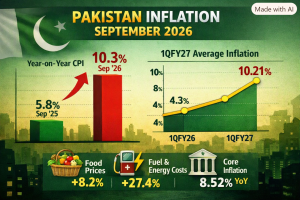
On the macro front, inflation clocked in at 7.0% YoY, while 6M T-bill yields reached 10.6% in Feb 2026. Remittances stood at US$3.3bn (+5.2% YoY), and FX reserves improved to US$16.3bn (+44.9% YoY), supporting external stability. The current account recorded a surplus of US$427mn, while FDI inflows rose sharply by 60.9% YoY in Feb 2026, respectively.
The KSE-100 Index declined by 8.7% MoM in Feb 2026, primarily due to a lack of strong triggers and profit-taking following the Dec 2025 quarter results. Additionally, rising regional geopolitical tensions, including Pak-Afghan strikes, further weighed on investor confidence.