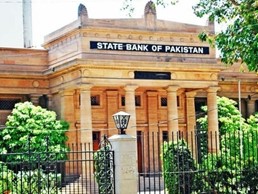
The Monetary Policy Committee (MPC) unanimously decided to keep the policy rate unchanged at 11.5 percent in its meeting held today. The Committee assessed that the macroeconomic outlook has improved from its previous meeting, though it remains susceptible to heightened risks, particularly following the resurgence of conflict in the Middle East. Meanwhile, the Committee observed that the earlier de-escalation had led to a decline in global oil prices and a relative ease in supply chain disruptions, which resulted in some improvement in recent economic indicators. Headline and core inflation moderated in June, though both remained at elevated levels. At the same time, incoming high-frequency indicators pointed to some pickup in economic activity, whereas external account pressures remained moderate. Taking into account these developments and evolving risks, the MPC assessed that the current monetary policy stance remains appropriate to guide inflation towards the target range of 5-7 percent over the medium term.
The Committee noted the following key developments since its last meeting. First, SBP’s FX reserves surpassed the end-June 2026 target of $18 billion, largely due to continued FX purchases amidst a small current account deficit in FY26, and realization of planned official inflows. Second, Pakistan’s sovereign credit rating was upgraded to “B” by Standard & Poor’s. Third, inflation expectations eased for both consumers and businesses in the latest sentiment surveys, while confidence indicators showed a mixed picture. Fourth, FBR met its revised tax revenue target for FY26. Lastly, the IMF increased its global inflation forecast for both CY26 and CY27 in the latest World Economic Outlook amid higher global commodity prices.
The MPC noted that proactive macroeconomic management – underpinned by a prudent monetary policy stance and sustained fiscal consolidation – has helped effectively manage the ongoing supply shock and preserve macroeconomic stability, despite a challenging global environment. The MPC reiterated its commitment to achieve the objective of price stability and will continue to closely monitor incoming data and evolving developments. The Committee also emphasized the importance of further strengthening external and fiscal buffers, and accelerating structural reforms. These are necessary to strengthen resilience to recurring shocks, enhance productivity and support higher and sustainable economic growth.
Real Sector
As anticipated, economic activity recorded some slowdown in Q4-FY26 in the wake of the Middle East conflict, surge in global energy prices, and austerity measures taken by the government. However, high-frequency indicators, including satellite imagery, automobile sales, cement dispatches, fertilizer offtake and business sentiments, suggest some recovery in economic activity in June. Further, the agriculture outlook has somewhat improved from the previous assessment. In particular, the initial assessment indicates a significant increase in expected sugarcane output, which is likely to more than offset lower projected cotton production. Better prospects for the commodity-producing sectors would also generate some positive spillovers for the services sector. Moreover, budgetary incentives, continuation of import tariff rationalization and pickup in private sector credit are likely to further support economic activity. Accordingly, the MPC expects real GDP growth to be in the range of 3.5 – 4.5 percent during FY27. However, the risks emanating from volatile global commodity prices amid the re-escalation of tensions in the Middle East and uncertain weather conditions, including the evolving El Niño effects, may weigh on growth prospects.
External Sector
The current account posted a deficit of $139 million in FY26, close to the lower bound of the projected range for the year. Record workers’ remittances partly offset the widening trade deficit amid the Middle East conflict. At the same time, the financial account recorded a surplus. These developments helped SBP strengthen its FX reserves and significantly reduce forward liabilities. However, with substantial debt repayments in recent weeks, FX reserves have reached around $17.3 billion as on July 17. Going forward, the current account deficit is expected to widen in line with the pickup in economic activity, though it is assessed to remain in the range of 0 to 1 percent of GDP in FY27. Workers’ remittances are likely to grow as compared to last year and continue financing a large part of the higher projected trade deficit. With the realization of planned official inflows and some likely improvement in private flows, SBP’s FX reserves are targeted to increase to $20.20 billion by end-December 2026.
Fiscal Sector
FBR achieved its revised tax collection target of Rs13.0 trillion by the end of FY26. The primary balance is estimated to have remained in surplus for the third consecutive year. Meanwhile, the overall fiscal deficit is estimated to have been significantly lower than the previous year. Going forward, fiscal consolidation is expected to continue in FY27, with the primary surplus targeted at 2.0 percent of GDP, whereas the overall fiscal deficit is targeted at 3.6 percent of GDP. Achieving these targets will require sustained progress in revenue mobilization and expenditure discipline amidst an uncertain domestic and global environment. In this regard, the MPC re-emphasized the need for fiscal reforms, particularly tax base-broadening efforts and curtailing PSE losses, to support high and sustainable economic growth.
Money and Credit
As of July 10, broad money (M2) growth moderated to 13.2 percent y/y from 15.2 percent at the time of the last MPC meeting, reflecting lower contributions from both NDA and NFA of the banking system. Within NDA, growth in net budgetary borrowing slowed, while private sector credit growth accelerated to 14.9 percent, supported by easing financial conditions. This increase in credit was broad-based and noted across working capital, fixed investment and consumer financing. The major borrowing sectors included textiles, telecommunications, and wholesale and retail trade. Furthermore, the Committee noted a moderation in reserve money growth, mainly reflecting the post-Eid reversal in currency in circulation, which, along with robust growth in bank deposits, contributed to a decline in the currency-to-deposit ratio.
Inflation
Headline inflation eased to 11.1 percent y/y in June 2026 from 11.7 percent in the previous month. This is primarily attributable to the pass-through of the decline in global energy prices to domestic consumers, alongside favorable electricity tariff adjustment. Core inflation also moderated to 8.4 percent but remains elevated. However, food inflation increased in June following a significant increase in prices of wheat and allied products as well as key perishable items. Going forward, the recent increase in global commodity prices, higher input costs and domestic food price pressures are likely to keep inflation above the target range over the next few months. Inflation is subsequently projected to ease gradually and stabilize near the upper bound of the 5 – 7 percent target range by June 2027. This outlook is subject to multiple risks, including volatility in global energy prices, unanticipated adjustments in administered energy prices, unfavorable climate conditions and potential fiscal slippages.