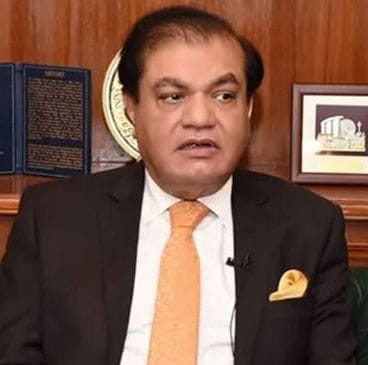
President of the Pakistan Businessmen and Intellectuals Forum and All Karachi Industrial Alliance, Chairman of the National Business Group Pakistan, Chairman of the FPCCI Policy Advisory Board, and former Provincial Minister for Information Technology, Mian Zahid Hussain, has expressed concern over the decline in Pakistan’s export receipts from key European markets. He said safeguarding preferential access to the European Union under GSP+ should be a national economic priority. The Ministry of Commerce should work with exporters to develop strategies for individual markets and key products where receipts are declining.
Citing the State Bank of Pakistan’s October 2026 Monthly Export Receipts Report, Mian Zahid Hussain said Pakistan’s merchandise export receipts from European markets fell by 1.84 percent year on year to $2.35 billion during July–September 2026. Receipts from Western Europe declined by 8.51 percent and those from Eastern Europe by 15.05 percent. Receipts from Germany fell by 12.77 percent, Italy by 8.49 percent, Belgium by 7.57 percent and the Netherlands by 3.07 percent. He urged the Ministry of Commerce to identify the reasons for the decline by product and work with exporters to address buyers’ concerns about pricing, quality and delivery.
Mian Zahid Hussain said the US–Iran war and closures of the Strait of Hormuz and Bab el-Mandeb had disrupted global trade, raising freight and insurance costs and lengthening transit times from Pakistan to Europe. Pakistani textile exporters had also reported that rising production and raw material costs were weakening their competitiveness. He welcomed Federal Minister for Maritime Affairs Muhammad Junaid Anwar Chaudhry’s October 8 announcement that Mediterranean Shipping Company (MSC) would resume its weekly ‘Premium I-Pak’ service from Karachi to major European ports. Maintaining the service would help exporters lower freight costs and deliver orders on time.
Mian Zahid Hussain said that, according to the European Commission, €7.5 billion worth of Pakistani exports were eligible for GSP+ preferences in 2024, with estimated tariff savings of €732 million. Any disruption to these preferences could affect textile and apparel orders, industrial employment and foreign exchange earnings. He said the EU’s 2023–2025 review of Pakistan’s GSP+ implementation, released in July 2026, raised concerns about practical progress on freedom of expression, minority protection and the prevention of forced labour and child labour. With transitional arrangements for existing preferences in place until the end of 2028, he urged the federal and provincial governments to demonstrate verifiable progress in implementing the 32 international conventions so that Pakistan could submit a strong application for continued preferences from 2029.
Mian Zahid Hussain said India and the European Union had concluded negotiations on a free trade agreement and the European Commission had submitted proposals to authorise its signing. Once the agreement enters into force, Indian textiles and apparel will gain better access to the European market. This could narrow Pakistan’s existing tariff advantage in products for which exporters from both countries compete for the same buyers. Any disruption to Pakistan’s GSP+ preferences during this period would make it harder to retain existing orders and secure new ones.
Mian Zahid Hussain urged the Ministry of Commerce, Ministry of Foreign Affairs, provincial governments, FPCCI and the business community to work together to address the EU’s concerns. He called for measures to reduce production and shipping costs and to help small and medium-sized exporters access testing laboratories recognised by European buyers, document the origin of their raw materials and meet environmental and labour standards.