
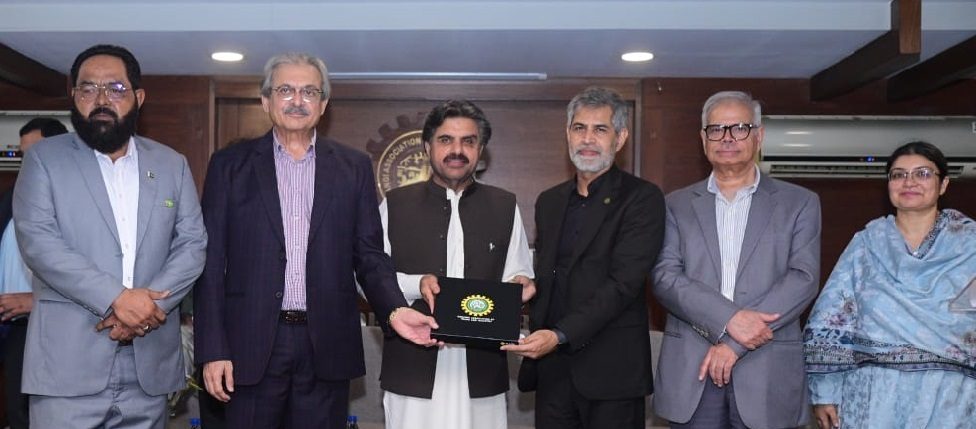
The Korangi Association of Trade and Industry (KATI) successfully hosted “KATI Industrial Edge 2025”, bringing together industrialists, business leaders, startup founders, academics, and economic experts in large numbers. The event underscored the urgent need for collaboration between traditional industries and startups to drive economic growth, foster innovation, and reduce reliance on imports.
Speaking as the chief guest, Sindh Energy and Planning Minister Syed Nasir Hussain Shah said that the provincial government is committed to facilitating stronger ties between startups and established industries. “Pakistan’s economy faces multiple challenges, but we firmly believe that our youth’s talent and innovation can pave the way toward prosperity,” he said. The minister noted that PPP Chairman Bilawal Bhutto Zardari has directed Sindh Chief Minister Murad Ali Shah to prioritize youth empowerment, particularly through startup support initiatives. “The government is already providing interest-free loans to startups, and recommendations from this conference will be considered to enhance facilities for young entrepreneurs further,” Shah added.
KATI President Junaid Naqi emphasized that KATI Industrial Edge 2025 provides a historic platform to connect the industry with startups directly. “This event reflects that industrialists are now ready to invest in innovation and research. By promoting import substitution industries, we can reduce external pressures, conserve valuable foreign exchange, and set Pakistan on a path to sustainable economic independence,” he said. Naqi further stressed that fostering local production through startups is critical to narrowing the trade deficit and stabilizing the country’s reserves.
KATI Deputy Patron-in-Chief Zubair Chhaya highlighted the immense potential of Pakistan’s youth, urging both government and industry to guide them toward constructive innovation. “This is the era of technology, and our youth have already proven their talent by achieving global recognition through startups. The government must provide easy financing and interest-free loans, while industry must prioritize these ventures as they ultimately strengthen industrial growth,” he said.
Chairperson of KATI’s Incubation and Startups Committee, Maheen Salman, underlined that startups are not just supplementary but essential for industrial progress. “If young innovators are given capital and industrial backing, they can transform the economy and make Pakistan globally competitive. Our youth lack neither talent nor ideas, only resources and guidance,” she remarked.
National Incubation Center Project Director Azfar Hussain pointed out that Karachi, particularly Korangi, serves as Pakistan’s economic engine. “Unfortunately, startups here do not receive the same government facilities that are standard in developed economies. Yet, despite these challenges, Pakistani startups have gained global recognition. Pakistani entrepreneurs in the US have built industries worth over \$10 billion, a feat that could be replicated at home if provided with infrastructure and policy support,” he said. He added that today’s global giants are tech-based companies, not traditional manufacturers, proving that startups can scale rapidly with minimal resources if backed effectively.
Other notable speakers included Mohammad Ghazal, COO of Saylani Welfare International Trust; Kareem Teli, Managing Director of Igloo Pakistan; Dr. Mehwish Akhtar Khan, Director of Opath Pharma; and Syed Ali Askari, CEO of Cemcon Engineering Services. The event also saw participation from startups associated with the National Incubation Center Karachi, Sir Syed University, and several vocational institutions.
The conference concluded with a commitment from all stakeholders to support the vision of “ Made in Pakistan to Rebuild Pakistan,” recognizing startups as a vital force for economic revival.