The All Pakistan Textile Mills Association (APTMA) strongly advocates for the removal of yarn and fabric from the 18% Goods and Services Tax (GST) in the upcoming federal budget for 2025-26. They argue that this move is essential to prevent the textile industry from total closure. The Export Finance Scheme (EFS) was introduced in the last fiscal year, reportedly in line with guidelines set by the International Business Forum (IBF) to eliminate subsidies and enhance exports. In contrast, it is a blow to the textile industry.
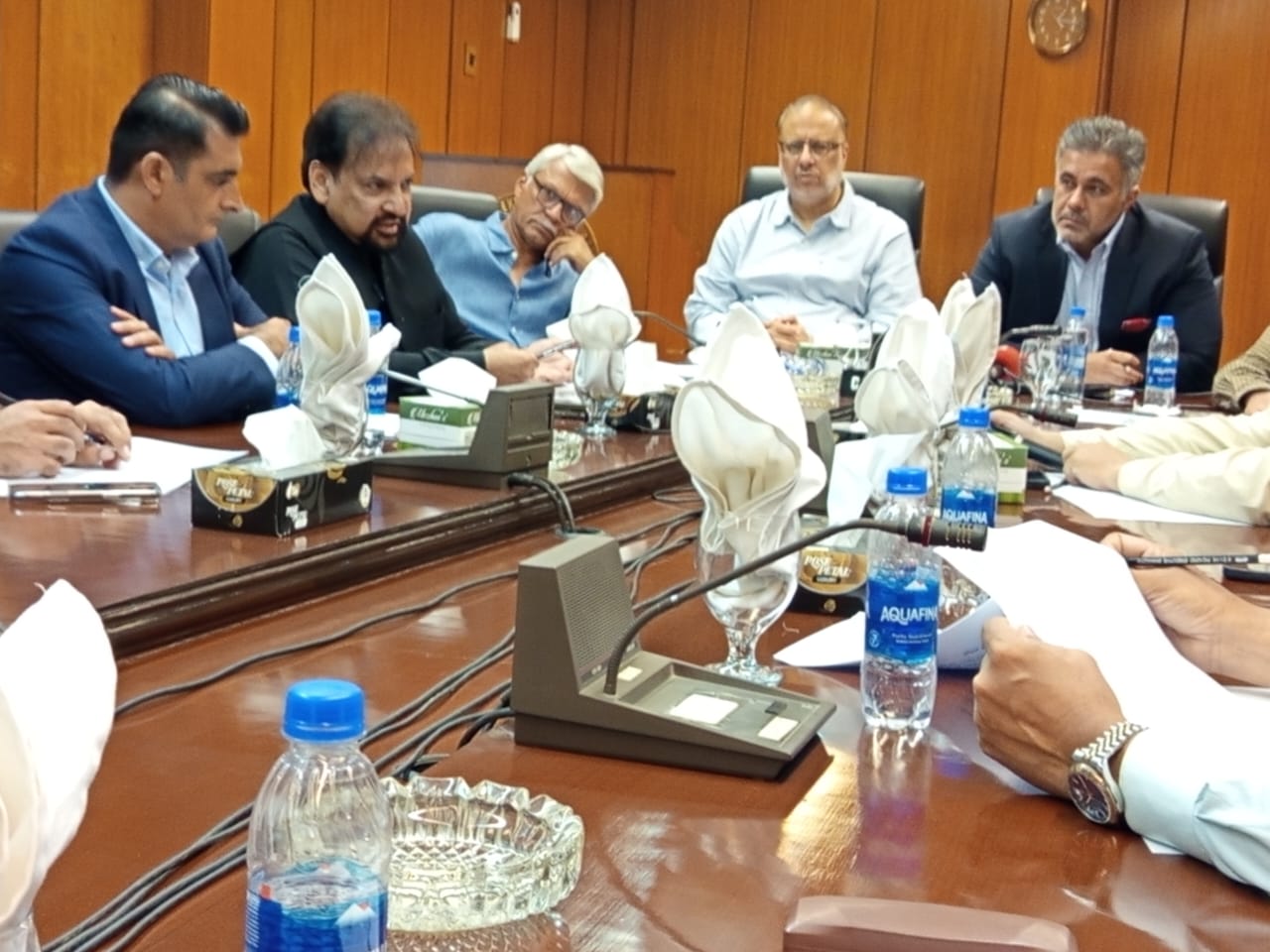
APTMA has highlighted pressing issues, especially the impact of the significant increase in imports of raw cotton, cotton yarn, and artificial yarns under the EFS scheme. This situation not only harms the local industry due to the systematic misuse of the EFS but is also detrimental to the government, as it leads to the evasion of duties and taxes. This point was emphasised by several key figures, including Mr Kamran Arshad, Central Chairman of APTMA; Mr Naveed Ahmed, Chairman of APTMA Southern Zone; Khawaja Muhammad Zubair, Chairman of Karachi Cotton Association (KCA); and Dr Jassu Mal, Chairman of Pakistan Cotton Ginners Association, who will hold a joint press conference in Karachi today.
During the press conference about future action, they hinted at the possibility of taking legal action if their concerns are not addressed. The upcoming budget will be presented by the Finance Minister in Parliament on June 10. They notified that commercial import licenses have increased to 2,400 from 800, causing a huge drain on the foraging exchange.
A statement issued by APTMA notes that the FY25 budget removed the sales tax exemption on local inputs under the EFS, while imports are now exempt from both sales tax and duty. Although the 18% sales tax on local inputs is refundable, the refund process is often delayed, incomplete, and expensive to manage. This situation particularly disadvantages small and medium-sized enterprises (SMEs).
Key points include:
– Only 60-70% of refunds are issued; the remaining refunds are stuck in manual processing with no progress made over the last 4-5 years.
Exporters are increasingly preferring imported inputs, putting local suppliers at a disadvantage.
– In FY25, there was a $1.5 billion increase in imports of cotton, yarn, and greige cloth, rising from $2.19 billion in FY24 to $3.64 billion, while export growth was only $1.4 billion.
– Net textile exports are projected to decline from $14.0 billion to $13.6 billion.
– Over 120 spinning mills and 800 ginning factories have closed, and loom workers are protesting in Faisalabad. SMEs face more challenges since they have fewer channels for import and must pay sales taxes at every stage, whereas integrated units are less affected.
Spinning mills are the primary consumers of local cotton, and without a support price and with declining demand, farmers are shifting to water-intensive crops, further straining the country’s water resources.
– Local cotton production is already at a historic low of 5 million bales and is likely to decrease further.
The cotton economy supports $2-3 billion in rural incomes, significantly impacting women’s employment in cotton picking. Many jobs and livelihoods are at risk. The imposition of an 18% sales tax on cottonseed and cottonseed cakes is unique to Pakistan, pushing farmers’ incomes below service costs and placing the highest burden on the poorest.
Moreover, without changes to the current policies, Pakistan could see an increase of $1.5-2 billion in net foreign exchange earnings. Instead, the nation is incurring expensive loans to cover import costs, resulting in a growing trade deficit, job losses, and declining tax revenue. Thousands have been unemployed, and millions of livelihoods have been lost in the cotton, textile, and related sectors.
Additionally, the United States has hinted at imposing a 29% tariff on all Pakistani exports if the current trade imbalances aren’t addressed. Cotton remains Pakistan’s primary import from the U.S., and there is potential for expansion, as Washington has indicated the availability of up to 1.5 million bales for export to Pakistan. President Trump has also invited a trade delegation from Pakistan, suggesting that they will discuss plans to double or triple Pakistan’s cotton imports from the United States. However, the question remains: who will buy this cotton? To absorb this volume, Pakistan must have a viable operational spinning industry. Without restoring competitiveness for domestic spinners, additional cotton imports will not materialise.
APTMA has emphasised its efforts to restore the EFS to its June 2024 status, which includes zero-rating local supplies for sales tax. They have held discussions with the Finance Minister, the Chairman and members of the Federal Board of Revenue (FBR), as well as representatives of the International Monetary Fund (IMF). However, the IMF has not agreed to the restoration, as indicated in their staff report.
Subjecting local supplies to an 18% sales tax while providing a zero rating on imports is seen as an anti-Pakistan policy that harms the economy. The government must urgently remove yarn and fabric from the EFS import scheme to protect the domestic textile supply chain from complete collapse.

