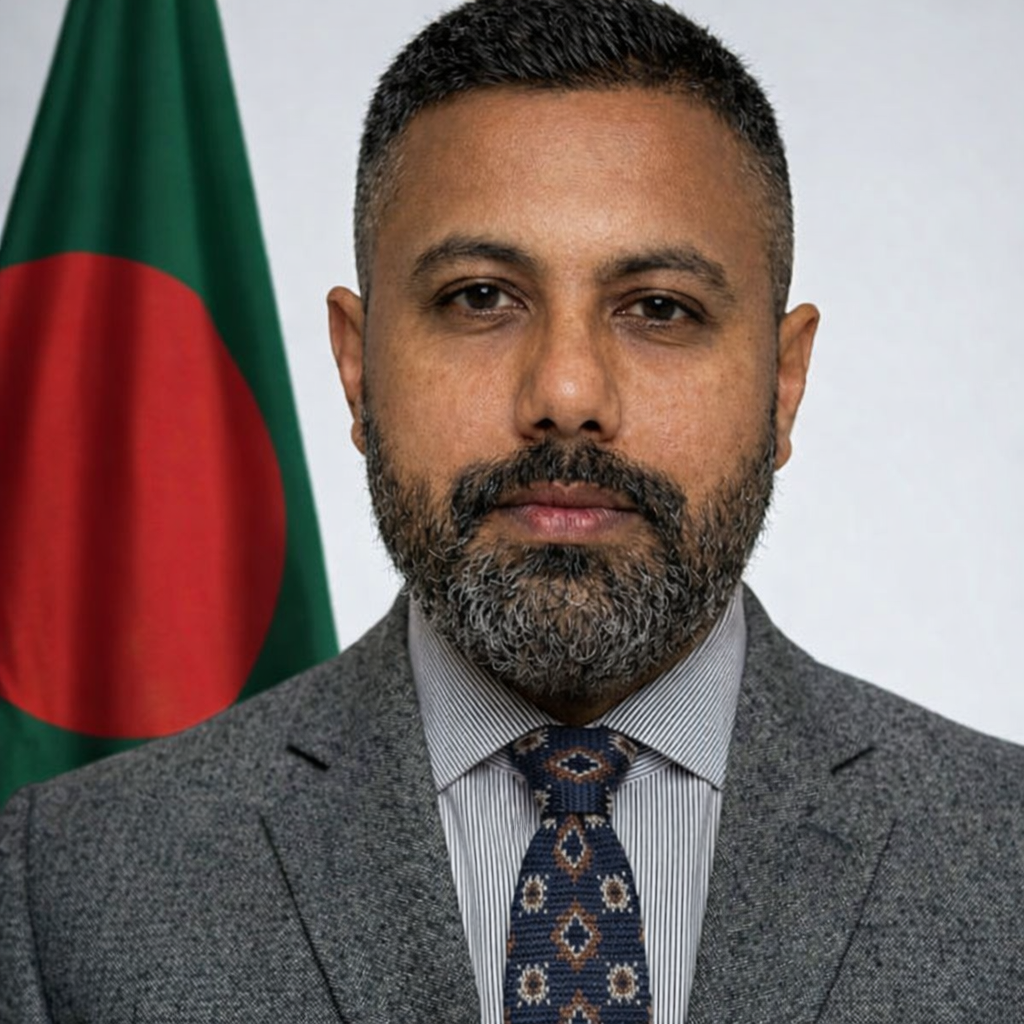
When the International Maritime Organization (IMO) announced its 2026 Bravery at Sea Honours this week, one name from Bangladesh stood out not for a dramatic rescue from raging waves, but for a masterclass in seamanship that saved every soul aboard a crippled gas carrier—and quite possibly 17.5 million more.
Captain Asif Ahmed, Assistant Harbour Master of the Chittagong Port Authority, received a well-deserved Letter of Commendation for his role in averting what could have been one of the worst maritime disasters in South Asian waters. However, the bare facts of the citation—“ship-handling skills in averting a major collision”—barely capture the life-or-death situation that unfolded in the Karnaphuli Channel this year.
**A Disaster Waiting to Happen**
On that fateful day, the LPG carrier Gas Harmony suffered a catastrophic loss of propulsion while navigating one of Bangladesh’s busiest and most treacherous waterways. Laden with highly flammable cargo, the 159-metre vessel became an uncontrolled projectile, drifting blindly toward port infrastructure and the densely populated shoreline of Chittagong.
In that terrifying window—mere minutes—Captain Asif did not hesitate. With the composure that only decades of command can instil, he positioned his own vessel as a living shield and executed a series of flawless manoeuvres, steering the runaway carrier clear of a collision. The alternative? A devastating explosion that could have incinerated the Gas Harmony’s 24-member crew, threatened the lives of several million nearby residents, and released toxic gas into the estuary for years.
Make no mistake: Captain Asif saved 17.5 million lives that day—directly and unequivocally, with his hands on the helm. Every single crew member aboard the LPG carrier walked ashore because one man refused to let tragedy unfold. Every city dweller in Chittagong, every passenger at Shah Amanat International Airport, and every family along the Karnaphuli River returned home safely that afternoon—blissfully unaware that their lives had been hanging by a thread, held in place by the steady hands of an Assistant Harbour Master who refused to blink.
**The Unquantifiable Toll Averted**
But the implications go far beyond the ship’s crew. The Karnaphuli Channel is the gateway to Bangladesh’s largest port, through which over 90% of the nation’s trade flows. A collision at this critical choke point would have shut down the channel for weeks, paralyzed the economy, and triggered an environmental catastrophe of staggering proportions. The lives of city dwellers in Chattogram, fishermen, tug crews, pilots, and dockworkers—easily 200 to 300 people in the immediate vicinity—were also at risk. Captain Asif’s intervention spared them all.
While the IMO’s citation focuses on “preventing a major collision,” we must read between the lines: this was a rescue operation in disguise. No life raft was launched, and no winch was lowered—but a life was saved for every second the Gas Harmony stayed clear of disaster.
**A National Treasure, A Global Inspiration**
What makes Captain Asif’s achievement even more remarkable is the humility with which he carries it. He is not a swashbuckling diver or a fire-fighting hero; he is an Assistant Harbour Master, a quiet professional whose daily work often goes unnoticed until the unthinkable happens. And when it did, he rose to the occasion with a courage that is no less visceral than that of any rescuer battling stormy seas.
His recognition by the IMO—alongside nominees from the US, India, France, and Greece—places him among the world’s bravest mariners. For Bangladesh, it is a moment of profound pride.
**The Ultimate Measure of a Mariner**
The IMO’s panel of judges, after reviewing over 50 nominations from around the globe, deemed Captain Ahmed worthy of this honour because they recognised what cold statistics cannot convey: that averted tragedy is still a triumph of the human spirit. He did not pull a drowning child from the water, but he ensured that no child would lose a parent to a fiery inferno. He did not extinguish a blazing tanker, but he prevented the flames from ever igniting.
In an era when we often celebrate flashy heroics, let us not forget the quiet, cerebral bravery of the harbour master who outsmarted a runaway ship. Captain Asif Ahmed’s story is a testament to the fact that courage wears many faces—and that sometimes the greatest heroism is embodied in the disaster that never occurs.
On 14 December 2026, when the IMO presents him with his Letter of Commendation, the world will applaud. But Bangladesh will know the full truth: that on a sweltering day in the Karnaphuli, one man’s nerves of steel saved 17.5 million lives, protected millions more, and kept the nation’s lifeline secure.
That is not just seamanship. That is heroism, pure and simple.
The editorial board extends its heartfelt congratulations to Captain Asif Ahmed and the Chittagong Port Authority. May his example inspire a new generation.
