Asad Shafi has assumed charge as Chairman of the All Pakistan Textile Mills Association (APTMA), vowing to accelerate textile exports and strengthen Pakistan’s position in global markets. In his statement following the election, Shafi said the textile industry has the potential to deliver an additional $3 billion in exports this year and increase exports by $10 billion within two to three years through targeted investment, provided a competitive and predictable business environment is ensured.
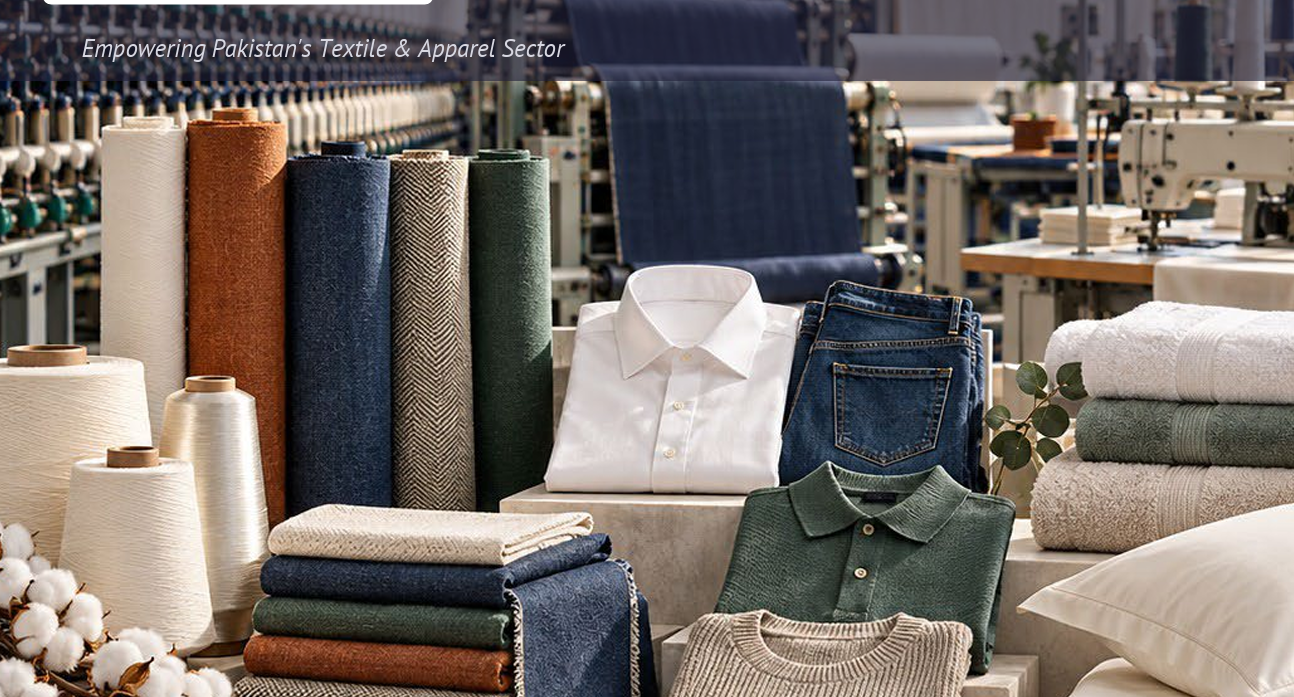
He said his foremost priority would be to work with the government and industry toward expanding value-added exports, investment and employment. Pakistan, he noted, is among the few countries with a complete textile value chain from fibre to fashion, covering spinning, weaving, processing, finishing, garments, apparel and home textiles. APTMA’s objective, he added, would be to harness this domestic supply chain to produce and export increasingly value-added finished products, ensuring greater value retention within Pakistan through employment, investment and foreign exchange earnings.
Shafi highlighted that more than 80 percent of textile exports already comprise value-added consumer products such as apparel and home textiles. The next opportunity, he said, lies in capturing a greater share of the value generated beyond manufacturing—through product development, design, branding, marketing and retail. He emphasized that APTMA would build stronger linkages between manufacturers and brands, support Pakistani brands in expanding internationally, and enable manufacturers to develop their own retail channels.
He announced that APTMA is broadening its membership base to include major Pakistani textile and apparel brands and retailers, bringing the entire value chain onto a common platform. “This is the next frontier for Pakistan’s textile exports. We should not only manufacture a product in Pakistan; we should increasingly design it, brand it, market it and sell it internationally as well,” he said.
The Chairman urged the government to ease foreign exchange and regulatory restrictions that hinder investment in overseas warehousing, distribution, marketing and retail operations, and to develop an enabling framework for e-commerce and retail-oriented shipments. He also called for competitive industrial energy and financing costs—electricity at ¢7/kWh, gas at $7/MMBtu, and financing at 7 percent per annum—to match regional competitors, along with restoring DLTL support and promptly refunding payments to improve exporters’ liquidity.
Shafi said Pakistan’s textile value chain has matured over decades, possessing deep manufacturing expertise, a skilled workforce and strong relationships with international buyers. With competitive costs and supportive policies, he added, the industry can substantially increase exports from existing capacity while investing for the next phase of growth.
He affirmed that APTMA would work closely with the government on a practical roadmap to boost exports, attract new investment and strengthen Pakistan’s textile presence in global markets.