
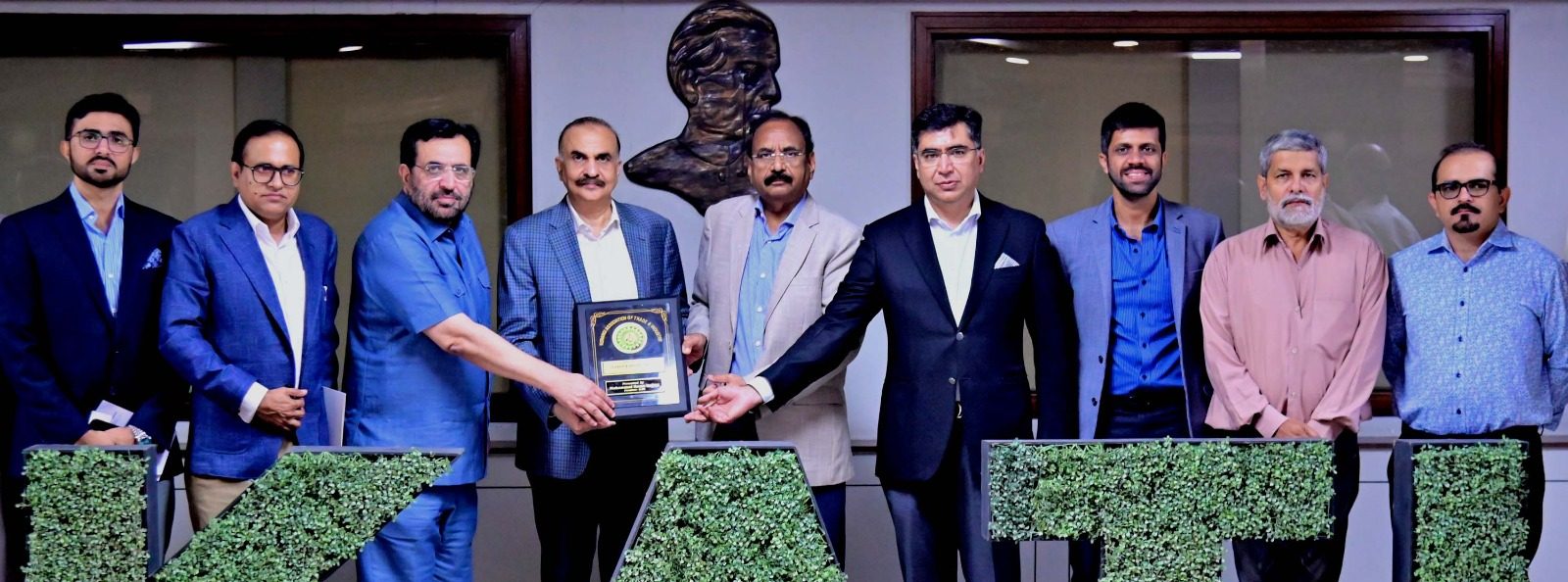
Sindh Labour and Human Resources Secretary Sajid Jamal Abro has said that the Sindh government is maintaining continuous engagement with industrialists to promote industrial development, create employment opportunities and protect workers’ rights, adding that coordination between the Labour Department and industrial establishments will be further strengthened to resolve industry-related issues on a priority basis.
He said the government’s objective was not only to ensure workers’ legal rights and provide them with a better working environment, but also to facilitate industrialists in conducting business activities. He expressed these views while addressing industrialists during his visit to the Korangi Association of Trade and Industry (KATI).
KATI President Muhammad Ikram Rajput, KITE Limited Chairman Zahid Saeed, Senior Vice President Zahid Hameed, Vice President Muhammad Talha Ali, former president Sheikh Fazal-e-Jalil, Labour Department Assistant Director Rafiq Gadani, Dr Ali Shahani and a number of other industrialists and KATI members were also present.
Sajid Jamal Abro said that a lack of coordination among the relevant stakeholders was contributing to problems that could be resolved through consultation and regular communication. He urged industrialists to inform him directly of any complaints about harassment by labour officers. He clarified that labour officers were not permitted to conduct more than two surveys in a year.
The Labour Secretary said the department had adopted a zero-tolerance policy against corruption. He also announced that a focal person from the Labour Department would be appointed immediately on the request of the KATI president.
Sajid Jamal Abro said the Sindh government was working to introduce a one-window operation in the Labour Department, as well as an online portal, which would significantly reduce the difficulties faced by industrialists and workers. He added that hospitals operating under the Sindh Employees’ Social Security Institution (SESSI) had also witnessed improvements.
The Labour Secretary said strict enforcement of child labour laws was being ensured across the province, and that immediate action would be taken without discrimination against violators. He said the responsibilities of the Labour Department were not limited to enforcement of laws but also included maintaining industrial peace, increasing employment opportunities, ensuring workers’ welfare and improving relations between employers and employees.
Earlier, KATI President Muhammad Ikram Rajput said improved coordination between industrial establishments and the Labour Department could help resolve labour-related issues in a timely manner and prevent disruption to industrial production.
He said the introduction of a one-window or integrated system for labour-related matters, including registration, inspections, wages and other legal requirements, could reduce difficulties for both industrialists and the Labour Department. The KATI president said there were complaints regarding inappropriate behaviour and harassment by some Labour Department officials and urged the department to take action against such officials and resolve the issue in consultation with industry, particularly KATI.
Muhammad Ikram Rajput said Karachi’s industries were playing a fundamental role in the national economy, exports, and employment but were facing a number of challenges, including high energy costs, inflation, rising business expenses, and difficulties with various government departments.
He called for the appointment of a Labour Department focal person at KATI to facilitate the resolution of issues faced by industrialists, maintain continuous coordination between the industry and the department, and raise KATI members’ awareness of labour registration procedures and applicable laws.
He also proposed the formation of a joint coordination committee comprising KATI and relevant Sindh government departments to ensure the immediate review and follow-up of issues affecting the industrial area, facilitate timely resolution of genuine problems and prevent disruption to industrial activities.
The KATI president said that skill development and technical training programmes should be launched in line with the requirements of KATI industries so that local youth could receive relevant training and secure employment opportunities in the industrial sector.
He proposed holding regular monthly or quarterly meetings between the government and KATI to review progress on issues affecting industry. He stressed that technical training and skills development programmes for young people should be linked to industry requirements so that young people could acquire employable skills rather than merely obtain academic degrees.
KATI Standing Committee and KITE Limited Chairman Zahid Saeed said Karachi’s industries were a major source of employment and export earnings for the country, making continuous consultation between industrial establishments and the government on policy matters essential.
He said the objective of labour laws should be to protect workers’ rights and promote industrial peace; therefore, industrialists should be taken into confidence regarding their implementation.
Zahid Saeed said labour laws required industrial establishments to employ persons with disabilities, but the number of such qualified candidates available in the market was very limited. He called for joint efforts to address the issue and recommended organising awareness sessions for industrialists and institutions regarding labour laws.
He also proposed that employees should be provided healthcare facilities on the pattern of takaful and urged the government to introduce a health card for employees through which they could obtain medical treatment at hospitals across the country.
Zahid Saeed said the industrial sector was ready to work with the government and play its role in promoting workers’ welfare and industrial development.
