
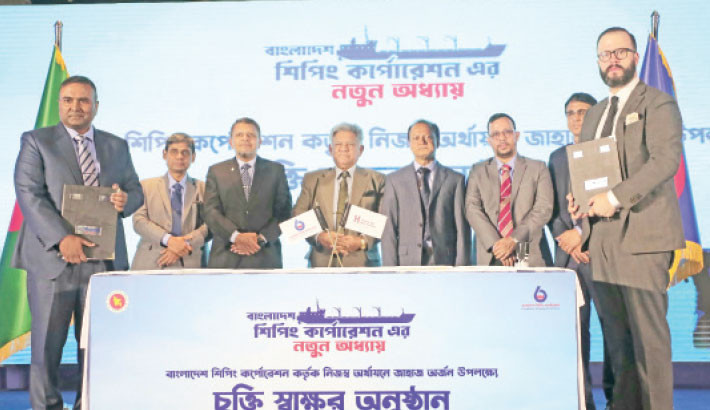
The state-owned Bangladesh Shipping Corporation (BSC) is set to expand its fleet with two new bulk carriers, one of which will arrive next month and the other by December. BSC signed an agreement on Sunday at the Hotel InterContinental in Dhaka with U.S.-based Hellenic Dry Bulk Ventures LLC for the purchase, which is valued at $76.7 million.
Currently, BSC operates five vessels—three oil tankers and two bulk carriers. With the addition of these two ships, the fleet will increase to seven, bringing the total number of Bangladeshi-flagged vessels to 102. Each vessel, with a capacity of 55,000 to 66,000 deadweight tonnage (DWT), is expected to generate Tk 150 crore annually and provide rotational employment for approximately 150 sailors.
Shipping Adviser Brigadier General (Retd) M. Sakhawat Hussain attended the contract signing as the chief guest, alongside Senior Secretary Mohammed Yousuf, BSC Managing Director Commodore Mahmudul Malek, and company representatives. Officials noted that this marks the first time in Bangladesh’s history that BSC has purchased ships using its own financing.
The procurement process began in June through competitive bidding, leading to two technically acceptable proposals. BSC is also planning to acquire three additional vessels with government financing, targeting ships currently under construction to expand the fleet further by December.
BSC launched its first seaborne cargo vessel, “MV Banglar Doot,” in June 1972. The fleet peaked at 38 ships in 1982, but there have been no additions since 1991. In contrast, private companies now operate 95 vessels, with KSRM Group leading with 28 boats, Meghna Group of Industries with 25, and Akij Shipping with 10. Currently, by fleet size, BSC ranks sixth.
Industry experts believe that expanding the Bangladeshi fleet offers multiple benefits: saving foreign currency on domestic cargo, earning foreign currency from international shipments, and creating jobs for local sailors. In the 2024-25 fiscal year, Chattogram Port handled 130 million tonnes of freight, much of which was transported by foreign-flagged vessels due to the limited size of the local fleet. (Courtesy – Daily Sun Report, Dhaka)

